

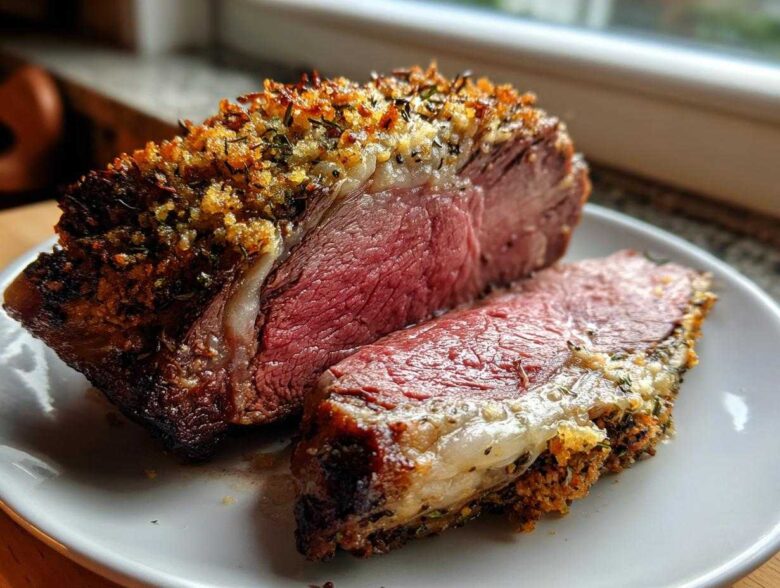
Oh, you’re finally ready to tackle the *big one*, aren’t you? I know that feeling! Getting that centerpiece roast perfect for Christmas dinner, or just a big family Sunday, can be terrifying. People clutch their pearls thinking that cooking a prime rib roast oven is some mystical art only for fancy chefs, but trust me, after years of testing and burning (and then perfecting!), I’ve cracked the code.
This isn’t some crazy recipe where you cross your fingers and pray. This is my foolproof method for nailing that glorious, juicy, medium-rare center every single time while still getting that crackly, rich herbal crust. We use a simple high-low temperature trick that guarantees an incredible showstopper main dish, and honestly, once you try this, you won’t look back. It’s truly the best way to cook a standing rib roast.
Why This is the Best Prime Rib Roast Oven Method (Showstopper Main Dish)
I get why people are scared of this cut—it’s expensive, and you only want to do it once a year! But this recipe takes all the guesswork out of achieving that perfect juicy prime rib. Honestly, the few neighbors I’ve convinced to try my method swear they’ll never buy deli meat again!
What makes this my go-to holiday beef roast is the reliability. You get stunning results without needing a chemistry degree:
- You get guaranteed edge-to-edge medium-rare perfection, which is essential for any showstopper main dish.
- The high-low temperature technique creates a beautiful, flavorful sear crust without turning the inside gray.
- The herb and garlic rub penetrates deep, making every slice incredible.
Understanding the Prime Rib Roast Oven Temperature Guide
This is the secret sauce, folks—it’s pure temperature physics! We start the prime rib roast oven experience by blasting the roast at a ridiculously high 500 degrees Fahrenheit for just 15 minutes. This initial blast is what sets the crust and kicks off all those wonderful Maillard reactions on the surface.
Then, immediately, without opening the door (don’t peek!), you drop the temperature way down to 325 degrees. This slow, gentle finish is what cooks the interior to that ideal medium rare roast doneness without stressing the muscle fibers. Following this prime rib temperature guide means you control the interior while the exterior gets its moment to shine. It’s brilliant, isn’t it?
Ingredients for Your Herb Crusted Prime Rib Roast Oven
Okay, let’s talk about what goes into this masterpiece. The beauty of this prime rib roast oven recipe is that it doesn’t rely on fancy, obscure ingredients; it relies on *quality* and *freshness*. You need a gorgeous 5 to 7-pound standing rib roast—make sure you get at least two or three ribs attached if you can! That presence matters for presentation.
For the rub, we’re keeping it classic because the beef flavor needs to shine. I always tell people, invest in the best beef you can get your hands on, because that’s what makes the absolute best oven roasted beef.
Here is exactly what you’ll need to gather up. Make sure your herbs are fresh—dried herbs just won’t do the job here:
- One (5-7 pound) standing rib roast, 2 to 3 ribs is perfect
- 4 tablespoons olive oil (good quality, please!)
- 6 cloves garlic, minced super fine
- 2 tablespoons fresh rosemary, chopped up small
- 2 tablespoons fresh thyme leaves (just the leaves, no woody stems!)
- 1 tablespoon coarse salt (you need that crunch!)
- 1 teaspoon black pepper (freshly ground, naturally)
- 1/2 cup beef broth (this is just for the au jus later, so don’t touch it!)
That’s it! See? Very straightforward. But when you mix that garlic and those herbs together—wow, the smell alone is worth the effort!
Essential Equipment for a Perfect Prime Rib Roast Oven
You can have the best prime rib roast oven recipe in the world, but if your tools aren’t up to snuff, you might run into trouble. Seriously, don’t even think about skipping the meat thermometer; it’s the number one reason people end up with grey roast beef!
Here are the absolute must-haves before you even think about rubbing that beef down:
- A reliable instant-read meat thermometer. I mean it—this is your guide for that perfect medium rare roast.
- A sturdy roasting pan fitted with a rack. We need that hot air circulating all around the beef!
- Plenty of heavy-duty aluminum foil. You’ll need it for the essential resting step.
Having these things ready means the minute you pull that roast out of the 500-degree oven, you’re ready to execute the rest of the plan flawlessly.
How to Prepare the Prime Rib Roast Oven: Step-by-Step Instructions
Alright, deep breath! This is where the magic happens for your prime rib roast oven experience. It feels high-stakes, but I promise, if you follow these steps in order, you’re golden. First thing’s first: tempering! You cannot put a fridge-cold roast into the oven and expect good results. Take it out about two to three hours before you plan to cook it.
While that’s warming up, make your rub. Mix that minced garlic, thyme, rosemary, coarse salt, and pepper in a little bowl. Get your hands in there and mash it all together until it’s a fragrant paste. Then, drizzle that lovely roast all over with olive oil—this helps the seasoning stick. Now, press that herb mixture firmly all over every single exposed side of the beef. I mean really press it on there!
Get your roasting pan ready with the rack and set your oven to 500 degrees Fahrenheit. Once it’s screaming hot, place your roast fat-side up onto that rack. Pop it in and roast hard for exactly 15 minutes. This initial blast is non-negotiable, it sears the outside!
Then, do not open the door! If you do, you lose all that heat and mess up the crust we just built. Immediately reduce the heat to 325 degrees Fahrenheit. Now we wait and monitor that temperature. Insert your meat thermometer deep into the thickest part of the roast, making sure you aren’t touching the bone—that will give you a false high reading! You are aiming for 125 degrees Fahrenheit for that perfect internal temperature for your medium rare roast.
The Critical Resting Period for Your Prime Rib Roast Oven
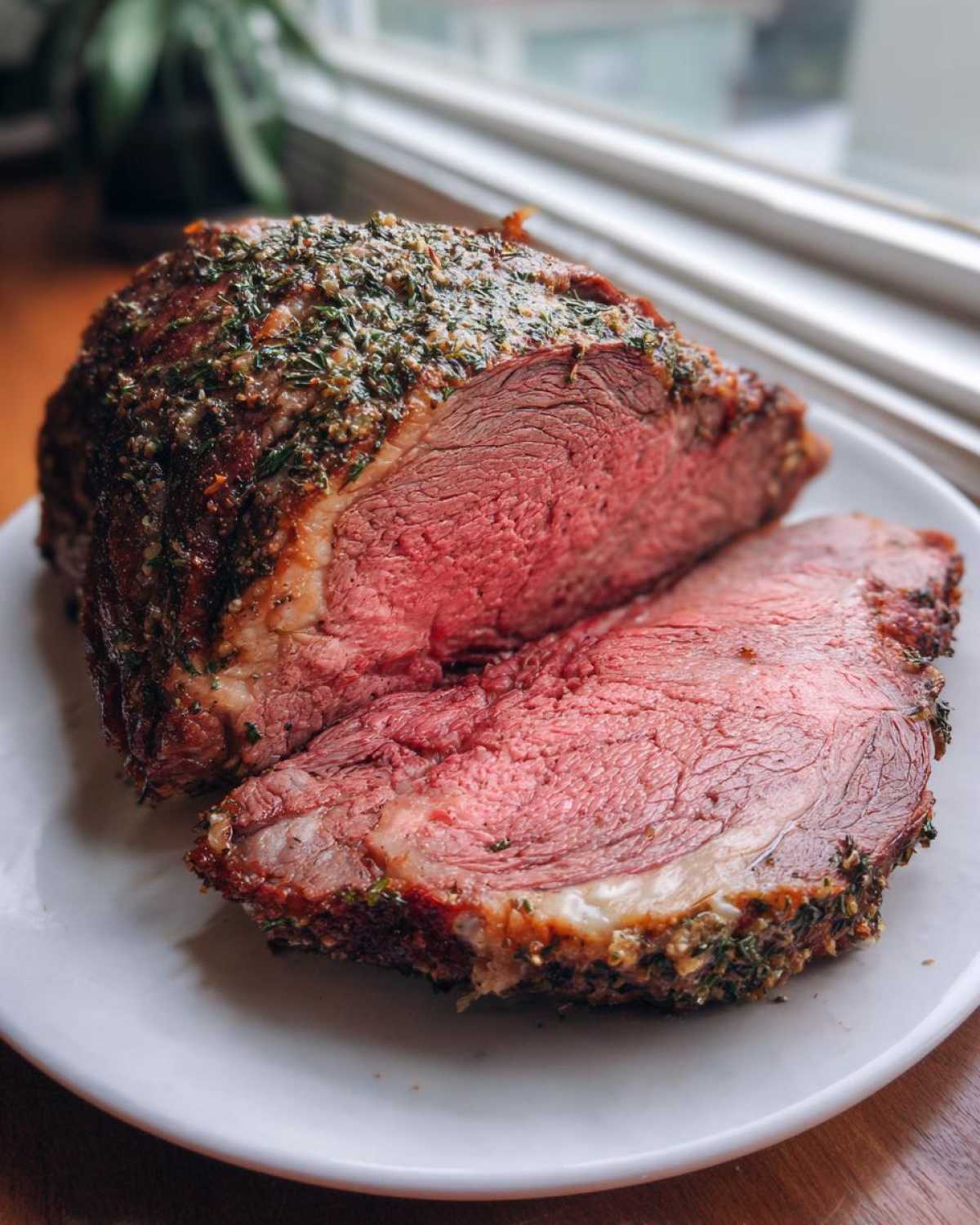
When the thermometer hits 125°F, pull that beauty out! Listen, I know you want to carve it immediately, but if you skip this step, all those beautiful juices just run out onto your cutting board, and you end up with a technically cooked but dry roast. Resting is mandatory if you want a truly juicy prime rib.
Tent the roast *loosely* with foil—don’t wrap it tight or you’ll steam the crust you worked so hard to create! Let it sit there for a full 20 minutes. While it rests, the internal temperature will keep climbing about five more degrees, which puts you perfectly in that sweet spot for slicing. This 20 minutes builds flavor and ensures every single slice is tender.
Making the Simple Roast Beef Au Jus
Okay, your glorious prime rib roast oven star just came out, it’s resting, and now you’re wondering about those amazing bits stuck in the bottom of your roasting pan? That, my friend, is pure gold—the foundation for the easiest, most flavorful roast beef au jus you’ve ever made.
You’ll need to move your roasting pan right onto your stovetop, over medium heat. Once it’s warm, grab a wooden spoon or a spatula and start scraping! You want to loosen up all those dark, crispy browned bits—we call that the *fond*. That’s where the deep beef flavor lives.
Once you’ve scraped the bottom clean, pour in that half-cup of beef broth you set aside. Let it bubble up and simmer for about five minutes, stirring constantly to incorporate everything. Seriously, this simple step turns pan drippings into liquid magic. Give it a quick taste check, strain it through a fine-mesh sieve to catch any chunky bits, and serve it alongside those gorgeous slices. It’s so good you might just forget the beef!
Tips for Success When Cooking a Standing Rib Roast Oven
You’ve mastered the temperature dance, but now let’s talk about the fine-tuning that separates a good roast from an absolute legend. Achieving that crispy, perfect herb crusted prime rib depends a lot on placement and knowing your specific cut. Remember that rule about inserting your thermometer? Don’t cheat on that, ever!
When you’re dealing with a bone-in roast, you must probe deep into the thickest meaty section, angling *away* from the bone. The bone acts like a conductor and will read hotter than the actual meat, leading you to pull the roast too early. Trust the thermometer in the center of the meat, not near the structure.
Also, think about your rub application one more time. If you want that incredibly flavorful crust, press that garlic and herb mixture on hard! It should feel like you’re trying to pat a coat onto the beef. We aren’t just sprinkling seasoning; we are creating a protective layer of flavor for the prime rib roast oven cook!
Adjusting Time for Boneless Prime Rib Cooking
If you went with a boneless prime rib cooking option instead of the standing roast, you need to make a mental note: it’s going to cook faster. Since there’s no bone insulating the center, the heat transfer is quicker all the way through. For a boneless roast, you can safely knock about 15 to 20 minutes off the total cooking time based on weight, once you’ve finished that initial 500-degree blast.
This is another reason why monitoring that temperature is so crucial when using the prime rib roast oven method. Don’t rely on time alone when you switch cuts. Pull it even a few minutes early if you hit that 125°F mark when cooking a boneless roast. You can always pop it back in for five minutes if you need to, but you can never un-cook an overdone roast! For more on our methods and policies, please check out our disclaimer page.
Storing and Reheating Leftover Prime Rib Roast Oven
Oh, the eternal question after the big meal: what do we do with the glorious leftovers? Don’t you dare let that beautiful roast go to waste! The trick to managing leftovers from your prime rib roast oven adventure is all about how you slice and store it.
Make sure you slice the remaining meat very thinly against the grain. Store those thin slices in an airtight container in the fridge—they keep wonderfully for about four days. When you’re ready to reheat, resist the urge to microwave it alone; it will dry out instantly!
Instead, gently warm it up. I like to simmer my leftover slices briefly (just 30 seconds or so) in a little bit of saved au jus, or even some beef broth, right on the stovetop. That little bit of added moisture brings the medium rare roast right back to life. It makes for the best sandwich filling later in the week!
Frequently Asked Questions About Your Prime Rib Roast Oven
I know that even with the best instructions, you might have a few little panics pop up when you’re dealing with a big roast. It’s totally normal! We’ve all been there wondering if we’re doing it right. Here are some of the questions I get asked most often about achieving that perfect prime rib roast oven result.
What is the final internal temperature after resting?
This is crucial! Remember, we are pulling the roast out when your thermometer hits 125 degrees Fahrenheit for that ideal medium rare roast. But because of carryover cooking during that mandatory 20-minute rest time, the internal temperature will climb about 5 degrees. So, your final slicing temperature should be right around 130°F—perfectly pink and juicy!
Can I use a dry rub instead of fresh herbs?
You *can*, but I strongly advise against it for this recipe! Fresh herbs melt down with the fat and oil and create a buttery, fragrant crust. A standard dry rub often just turns crusty and slightly bitter under the high heat blast. If you absolutely must use dried herbs, use about half the amount the recipe calls for, and maybe mix them with a little softened butter instead of olive oil to help them adhere better to your oven roasted beef.
How do I ensure my roast is truly medium-rare?
The only way to guarantee a medium rare roast is to trust your instant-read thermometer. Don’t try to guess by time or poking it with a finger. Insert the probe into the center of the thickest part of the meat, making sure it doesn’t hit any bone or connective tissue. When it reads 125°F, immediately pull it out and start resting. That is the golden path to success!
If you have any other questions about making your next holiday centerpiece spectacular, don’t hesitate to reach out via my contact page. Happy roasting!
Nutritional Estimates for This Special Occasion Beef
Now, let’s talk numbers for a second. Since this is a big, glorious cut of beef, it’s definitely not a light dish, but when you’re making a Christmas dinner centerpiece, you expect that! These estimates are based on a 6-ounce serving of cooked meat, trimmed slightly, but remember, every roast is unique.
The exact numbers change depending on how much fat you trim off your special occasion beef, so use this as a general guideline. We aren’t focusing on low-sodium here, but we *are* focusing on high protein, which is what makes this such a satisfying meal!
- Serving Size: 6 ounces cooked
- Calories: Around 450
- Protein: A whopping 38 grams!
- Fat: Approximately 32 grams (a good chunk of that is the delicious rendered fat that keeps it juicy)
- Carbohydrates: Zero! (Perfect for low-carb eaters!)
- Cholesterol: About 130mg
Just keep in mind that this is an estimate for the meat only. If you decide to drown your magnificent slices in the rich roast beef au jus, those numbers will bump up a bit! Enjoy every bite—you definitely earned it after mastering the prime rib roast oven technique!
PrintFoolproof Oven-Roasted Prime Rib with Herb-Garlic Crust
A straightforward recipe for cooking a juicy, medium-rare prime rib roast in the oven using a simple herb and garlic crust.
- Prep Time: 20 min
- Cook Time: 120 min
- Total Time: 140 min
- Yield: 6 servings
- Category: Main Course
- Method: Oven Roasting
- Cuisine: American
- Diet: Low Fat
Ingredients
- 1 (5-7 pound) standing rib roast, 2-3 ribs
- 4 tablespoons olive oil
- 6 cloves garlic, minced
- 2 tablespoons fresh rosemary, chopped
- 2 tablespoons fresh thyme leaves
- 1 tablespoon coarse salt
- 1 teaspoon black pepper
- 1/2 cup beef broth (for au jus)
Instructions
- Remove the prime rib from the refrigerator 2 to 3 hours before cooking to allow it to come to room temperature.
- Preheat your oven to 500 degrees Fahrenheit.
- In a small bowl, mix the minced garlic, rosemary, thyme, salt, and pepper to create the herb rub.
- Rub the entire surface of the roast evenly with olive oil.
- Press the herb mixture firmly onto all sides of the roast.
- Place the roast, fat side up, in a roasting pan fitted with a rack.
- Place the pan in the preheated 500 degree oven and roast for 15 minutes.
- Reduce the oven temperature to 325 degrees Fahrenheit. Do not open the oven door.
- Continue roasting until the internal temperature reaches 125 degrees Fahrenheit for medium-rare (use a meat thermometer inserted into the thickest part, avoiding bone). This usually takes about 13 to 15 minutes per pound after the initial high-heat blast.
- Remove the roast from the oven. Tent it loosely with foil and let it rest for 20 minutes before carving. The internal temperature will rise about 5 degrees during resting.
- To make au jus, place the roasting pan on the stovetop over medium heat. Scrape up any browned bits from the bottom of the pan. Add the beef broth and simmer for 5 minutes, stirring constantly. Strain before serving.
Notes
- For a boneless roast, expect the cooking time to be slightly shorter.
- Use a reliable meat thermometer; this is key to a perfect medium-rare result.
- Resting the meat is mandatory for juices to redistribute.
Nutrition
- Serving Size: 6 ounces cooked
- Calories: 450
- Sugar: 0
- Sodium: 350
- Fat: 32
- Saturated Fat: 12
- Unsaturated Fat: 20
- Trans Fat: 0
- Carbohydrates: 0
- Fiber: 0
- Protein: 38
- Cholesterol: 130