

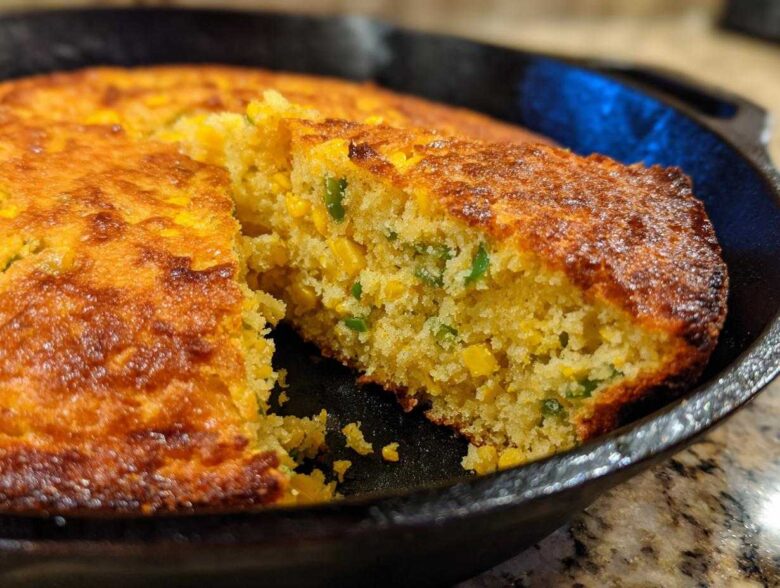
I’m going to let you in on a little secret: there is no such thing as bad cornbread… unless it comes out of the oven pale, soft, and disappointingly limp. Ugh! We are aiming for that deep, golden-brown, nearly fried bottom and edges that crunch just right when you cut into it. That crispiness is non-negotiable!
That’s why this recipe for Cast Iron Skillet Cornbread is the only one you’ll ever need. I remember standing on a stool by Grandma’s wood-burning stove, watching her pour batter into that smoking-hot skillet. The sizzle alone told you everything you needed to know about the result. She taught me that the pan does about eighty percent of the work here. Trust me, if you follow these steps exactly, you’re going to bake the most perfect cornbread you’ve ever had. We’re making something truly special today, and if you want to learn more about our kitchen philosophy, you can always check out our About Us page!
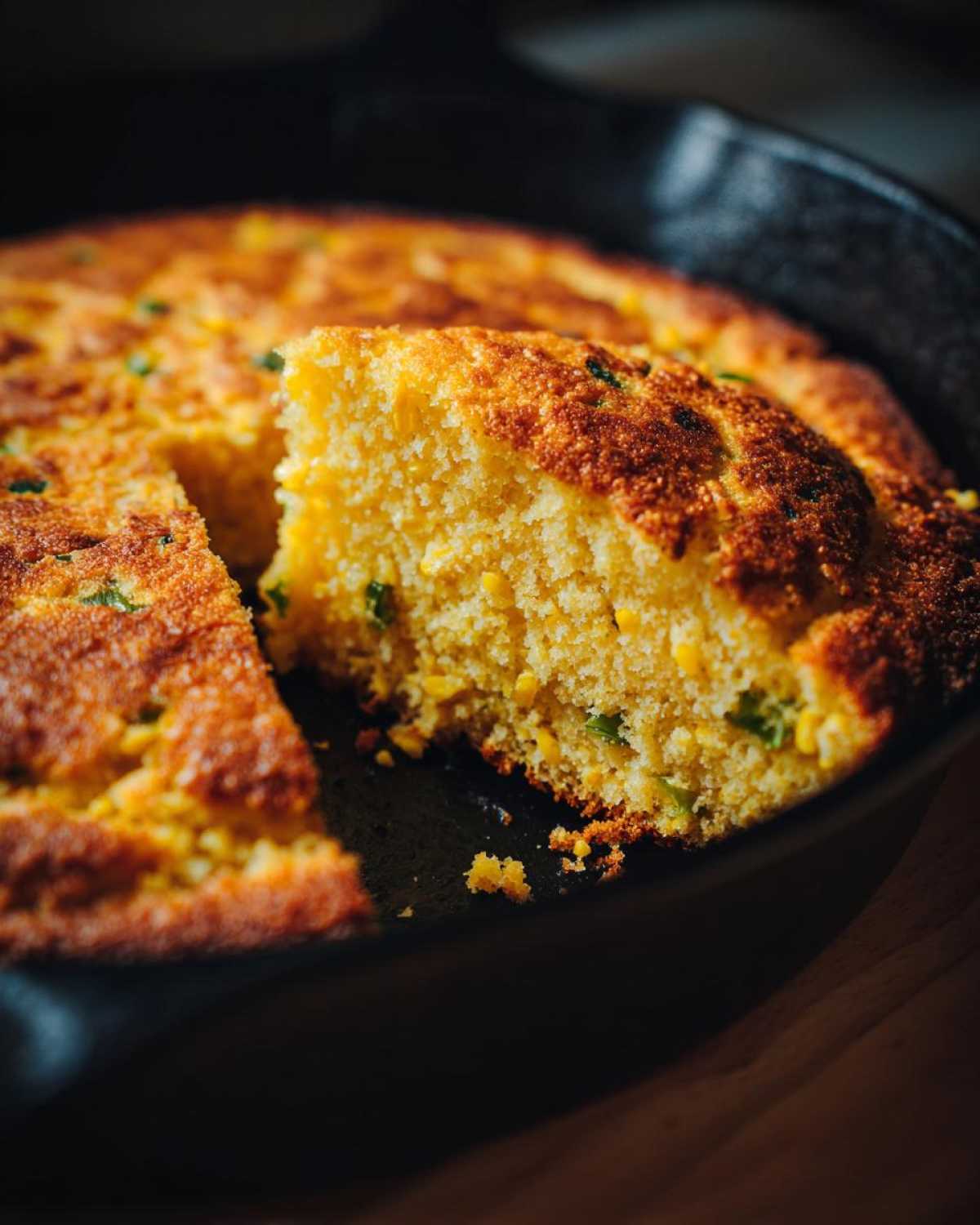
Why This Is the Best Cast Iron Skillet Cornbread Recipe
Honestly, forget those glass baking dishes or light metal pans you might usually use. They just can’t handle the heat we need. This Best Cast Iron Skillet Cornbread Recipe relies entirely on that super heavy, heat-retaining iron to give those beautiful edges.
- It ensures an unbelievably moist interior because the batter cooks evenly and quickly.
- It delivers that signature, almost fried, crispy golden crust that you just can’t get any other way.
- It saves you dishwashing time—you serve straight from the pan!
Achieving the Perfectly Baked Cornbread Tips
The trick here is the shock of heat when the batter hits that screaming-hot, oiled pan. When you put the skillet in the oven while it preheats, what you’re doing is creating a heat reservoir. As soon as that cool batter goes in, the oil instantly transfers its intense heat directly up the sides and bottom.
This immediate blast of high, direct heat is what sets the edges fast, locks in the moisture on the inside, and solidifies that amazing crunchy edge. It’s pure cast iron magic!
Gathering Ingredients for Your Cast Iron Skillet Cornbread
This list is straightforward, but precision with your amounts for this Cast Iron Skillet Cornbread matters! You need a good 1 1/2 cups of yellow cornmeal, which gives it that classic sunny color. We balance that with flour, baking powder for lift, and salt. Then come the wet ingredients and the optional powerhouses.
For the extras, grab about a half cup of sharp cheddar and one jalapeno, seeds out and chopped up fine—if you like things spicy! Don’t forget the oil; we are using half a cup in the mix, but remember, we need two more tablespoons for that sizzling preheat step in our skillet.
Ingredient Notes and Substitutions for Skillet Cornbread
Okay, let’s talk sugar. This recipe calls for a quarter cup, which gives you a lovely, slightly sweet Southern Style Cornbread in Skillet. If you read my notes, you know I also love a totally savory version, so feel free to knock that sugar down to just one tablespoon or ditch it entirely!
Buttermilk is non-negotiable unless you substitute. If you’re out, just take a cup of regular milk and stir in a tablespoon of white vinegar or lemon juice and let it sit for five minutes—that’s your homemade buttermilk! And for the absolute best crispy cornbread crust? Skip the vegetable oil in the skillet and use rendered bacon grease. Nothing beats that flavor!
Essential Equipment for Cast Iron Skillet Cornbread
You absolutely cannot cheat on the main tool here. We need a real, sturdy 10-inch cast iron skillet. It holds heat like nothing else, which is what gives us that incredible crust. Make sure you have a good pair of heavy-duty oven mitts too, because that pan is going to be scorching hot when it comes out of the oven!
Beyond the skillet, you just need a couple of basic bowls for mixing, a whisk, and a rubber spatula. You can check out my recipe for easy homemade garlic butter if you want an extra step for serving later, but for the baking itself, it’s just the iron that matters.
Step-by-Step Buttermilk Cornbread Skillet Instructions
Now we move from the theory to the actual fun part: mixing and baking! Look, this isn’t a gentle process; we need some drama for that crust. First, get that oven up to 425 degrees Fahrenheit. That high heat is what we need! Pop your 10-inch skillet right in the middle while it preheats—we want that iron totally blazing hot.
While the oven does its thing, mix your dry stuff—cornmeal, flour, salt, baking powder, and sugar—in one bowl. Then, whisk the wet stuff—buttermilk, the main half-cup of oil, and those eggs—in the other. Pour the wet into the dry, and I mean *just* combine them until you don’t see streaks of flour anymore. Don’t go crazy mixing, or you’ll lose that tender interior we talked about. If you’re adding cheese or peppers, fold them in super gently here!
The crucial moment comes next. Get those oven mitts on! Pull that monsterously hot skillet out. Now, quickly add those final two tablespoons of oil—watch it shimmer! Pick up that batter and pour it in fast. You should hear an immediate, satisfying sizzle all around the edges. That sound means you’re on your way to the Cast Iron Skillet Cornbread of your dreams. Back into the oven it goes for about 20 to 25 minutes. If you’re looking for tips on handling wet batters, make sure to check out my buttermilk pancakes recipe; the science on avoiding overmixing is the same!
Preheating the Skillet: Key to Crispy Cornbread Crust
I can’t stress enough how important this step is for that incredible crust. We are aiming for a specific temperature to achieve that perfect texture. You want your oven set to 425 degrees Fahrenheit, and that skillet needs to sit in the heat for a full 15 minutes, minimum. Don’t just let it warm up; let it soak up all that heat.
When you add that last bit of oil before the batter goes in, it needs to be shimmering—almost smoking slightly. If the oil isn’t hot enough, the batter will just soak it up sluggishly instead of setting instantly. This hot fat is your secret weapon for a golden, crispy bottom that separates cleanly every time!
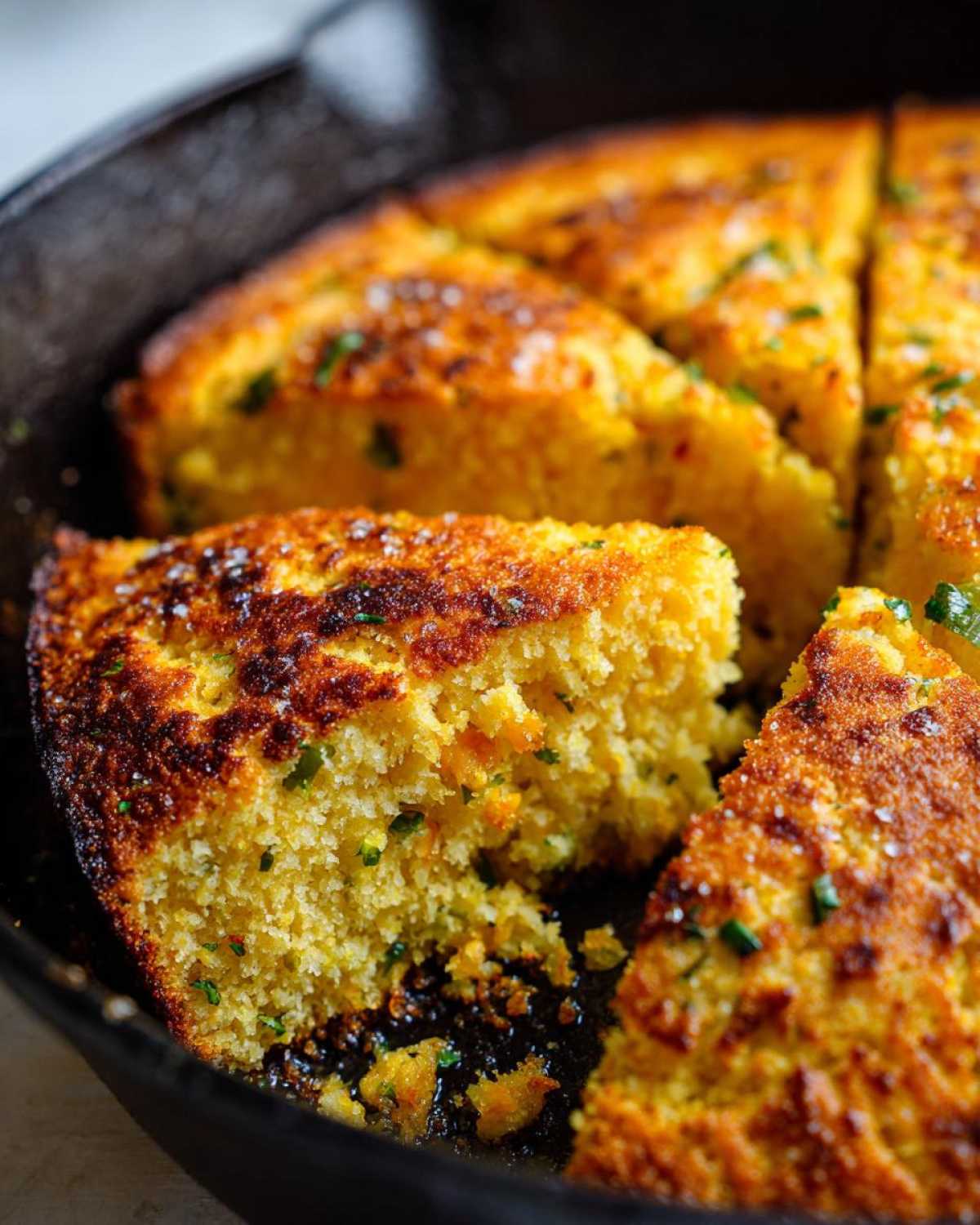
Mastering the Southern Style Cornbread Skillet Technique
The mixing part is honestly where most folks mess up their beautiful Cast Iron Skillet Cornbread. You want to mix just until the wet and dry parts are acquainted—that’s it! If you stir too much, you develop the gluten in the flour, and you end up with tough, chewy cornbread instead of tender, crumbly goodness. Keep your strokes quick and gentle!
When it comes to testing for doneness, the toothpick test is your first stop. If it comes out totally clean, great! But you also need to watch the edges. You’ll see the cornbread pull away from the sizzling hot sides of the skillet just a tiny bit. That’s a good visual sign!
Once it’s out, don’t slice into it immediately! Resist the urge! Let it sit right there in the hot iron for about five minutes. That short resting period lets the steam redistribute through the crumb, making the middle perfectly soft. If you want to look at another treasured Southern recipe while waiting, check out my blackberry dumplings!
Variations: Making Jalapeno Cheddar Cornbread Baking
While the basic recipe is divine, sometimes you just need a little kick, right? This is where the fun comes in with Jalapeno Cheddar Cornbread Baking. The basic batter handles mix-ins beautifully, but you have to treat those add-ins gently!
If you’re rocking the cheese and pepper variation, wait until *after* you’ve mixed the wet and dry ingredients together, but *before* you pour it into the hot skillet. Fold them in just a few times with your spatula. We don’t want to deflate all the air we worked hard to incorporate!
Adding sharp cheddar gives you those gorgeous pools of melted cheese, and the peppers offer a nice warmth that plays so well against the cornmeal. For an even richer dish sometime, you might like my cream cheese corn casserole recipe!
Storage and Reheating Cast Iron Skillet Cornbread
Happily, this Cast Iron Skillet Cornbread is delicious the next day too, but you have to store it right to save that crust! If I have leftovers, I usually let it cool completely right in the pan before covering the whole thing with plastic wrap or foil. You can keep it on the counter for a day or two, but if it’s humid, pop it in the fridge.
The trick to reviving it is avoiding the microwave—it makes the crust soggy instantly! If you need to warm up a slice, wrap it in foil and toss it in a 350°F oven for about ten minutes. Better yet, warm a slice directly on a baking sheet for five minutes to bring back some of that glorious crispiness!
Frequently Asked Questions About Skillet Cornbread
I always get questions when people try this recipe because the cast iron part feels a little intimidating! Don’t worry; these little things trip everyone up on their first try, but once you know the secret, you’re set for life. If you have more questions after trying it out, feel free to reach out on my Contact page!
What size cast iron skillet works best for this recipe?
For this exact amount of batter, you really want to stick to a standard 10-inch cast iron skillet. If you use anything smaller, like an 8-inch, the batter will be too thick, and it won’t cook through properly—you’ll end up with raw centers! If your skillet is huge, say 12 inches, you should probably double the recipe so you still get that nice depth for a great crumb.
How do I prevent my Cast Iron Skillet Cornbread from sticking?
This is all about the sizzle, honey! Preventing sticking during your Cast Iron Skillet Cornbread baking comes down to step number five in the instructions. You must preheat that skillet in the oven for at least 15 minutes *before* you even start mixing the wet and dry ingredients.
When you pull that screaming hot pan out, you add the last two tablespoons of oil. If that oil shimmers—I mean it’s almost smoking a tiny bit—it’s hot enough. When the batter hits that shimmering hot fat, it instantly seals the outside, creating that crisp crust and preventing any sticking whatsoever. I promise, if you get the oil hot enough, it releases easily!
Can I make this recipe without buttermilk?
Yes, absolutely! Buttermilk is my preferred choice because it adds a lovely tanginess that cuts through the richness of the cornmeal and fat. However, if you are totally out, the simple trick I mentioned before still works perfectly. Measure out one cup of regular milk—any kind will do, whole or 2%—and stir in one tablespoon of white vinegar or fresh lemon juice.
Wait about five minutes. You’ll see it start to curdle slightly. That slightly acidic milk acts just like buttermilk and gives you that lovely texture in your cornbread!
Nutritional Estimates for This Recipe
So, let’s talk numbers, though you know I bake based on love, not macros! Keep in mind these estimates are for one slice of the Cast Iron Skillet Cornbread based on the recipe using half the optional cheese. They are just a starting point, of course.
You’re looking at about 280 calories per slice. It’s got around 15 grams of fat (thanks, oil and fat content!) and about 32 grams of carbs. I usually count about 6 grams of protein per serving. For exact details on all the numbers, you can always check out the full disclaimer on our site!
PrintThe Ultimate Crispy-Edged Cast Iron Skillet Cornbread
Follow these steps to bake cornbread in a cast iron skillet, achieving a moist interior and a signature crispy, golden-brown crust.
- Prep Time: 10 min
- Cook Time: 25 min
- Total Time: 35 min
- Yield: 8 servings
- Category: Side Dish
- Method: Baking
- Cuisine: American
- Diet: Vegetarian
Ingredients
- 1 1/2 cups yellow cornmeal
- 1 cup all-purpose flour
- 1/4 cup granulated sugar (adjust for sweet/savory preference)
- 1 tablespoon baking powder
- 1 teaspoon salt
- 1 cup buttermilk
- 1/2 cup vegetable oil, plus 2 tablespoons for preheating
- 2 large eggs, lightly beaten
- 1/2 cup shredded sharp cheddar cheese (optional)
- 1 small jalapeno, seeded and minced (optional)
Instructions
- Preheat your oven to 425 degrees Fahrenheit. Place a 10-inch cast iron skillet inside the oven while it preheats for at least 15 minutes.
- In a large bowl, whisk together the cornmeal, flour, sugar, baking powder, and salt.
- In a separate bowl, whisk together the buttermilk, 1/2 cup of vegetable oil, and eggs until combined.
- Pour the wet ingredients into the dry ingredients. Mix until just combined; do not overmix the batter. If using, gently fold in the cheddar cheese and minced jalapeno.
- Carefully remove the hot skillet from the oven using oven mitts. Add the remaining 2 tablespoons of vegetable oil to the hot skillet. The oil should shimmer immediately.
- Pour the cornbread batter quickly into the hot, oiled skillet. The batter should sizzle when it hits the hot oil.
- Return the skillet to the oven and bake for 20 to 25 minutes, or until a toothpick inserted into the center comes out clean.
- Let the cornbread cool in the skillet for 5 minutes before slicing and serving directly from the pan.
Notes
- For a crispier crust, use bacon grease instead of vegetable oil to preheat the skillet.
- If you prefer a less sweet cornbread, reduce the sugar to 1 tablespoon or omit it entirely for a savory Southern style.
- Baking at 425 degrees Fahrenheit is key to developing the crust quickly before the interior overbakes.
Nutrition
- Serving Size: 1 slice
- Calories: 280
- Sugar: 6
- Sodium: 350
- Fat: 15
- Saturated Fat: 4
- Unsaturated Fat: 11
- Trans Fat: 0
- Carbohydrates: 32
- Fiber: 2
- Protein: 6
- Cholesterol: 55